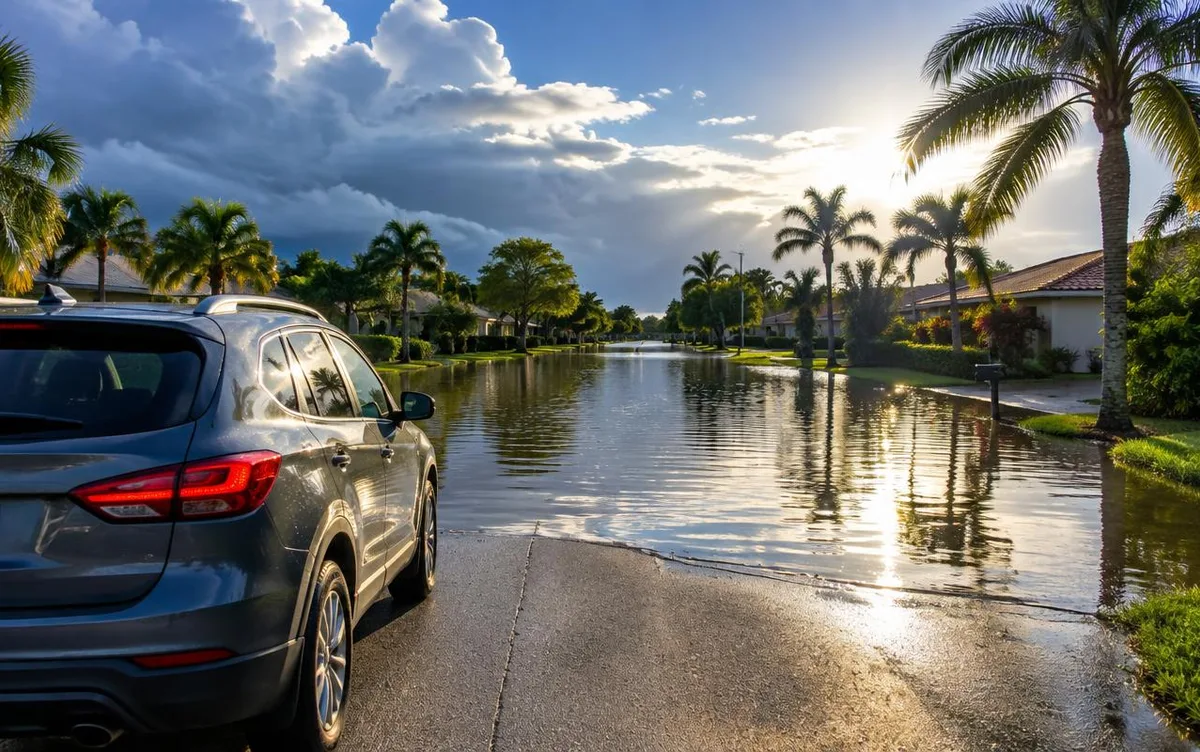
If you've lived in Central Florida for even one summer, you know the afternoon storms. One minute the sky is clear, the next the rain is so heavy you can barely see, and low roads, underpasses and parking lots start filling with water. Most flooding car trouble starts with one decision: driving into water that looked shallow. Here's how to avoid it, and what to do if it happens anyway.
Why standing water is so risky
- You can't see how deep it is. Water on a road looks the same at two inches and at two feet.
- You can't see what's under it: potholes, a washed-out edge, debris, or an open drain.
- Less water than most people think can stall a car, and moving water can push a car sideways or float it off the road.
- Water pulled into the engine's air intake can cause serious damage in seconds.
The National Weather Service's advice is simple: "Turn Around, Don't Drown." If you can't see the road under the water, don't drive into it. Find another way or wait for the storm to pass. Most Florida downpours ease off fairly quickly.
Places that flood first around Orlando
Watch for underpasses, low dips in the road, streets next to retention ponds and canals, the low corners of big parking lots, and roads with poor drainage. If you drive the same route every day, you'll learn where water collects after a storm. Plan around those spots during heavy rain.
If your car stalls in water
- Don't try to restart the engine. If water got into the engine, turning it over can damage it badly. This is the most important step.
- Turn on your hazards.
- If the water is rising or moving, get out and get to higher ground if you can do it safely, and call 911. Your safety matters more than the car.
- If the water is calm and shallow and you're safe, stay put and call for a tow.
After the car has been in water
Even if the car seems fine once the water goes down, water can get into the engine, transmission, electronics and brakes. Before you drive it again:
- Don't start it until a mechanic has checked it.
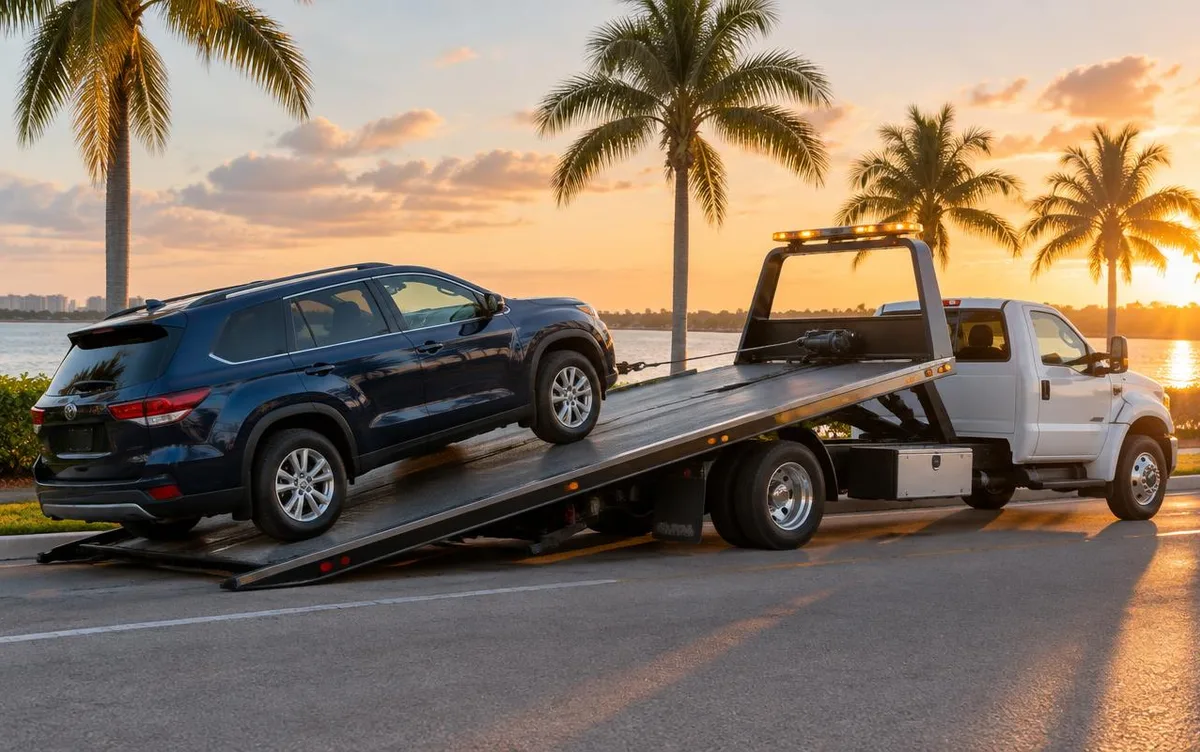
- Have it towed to your shop on a flatbed, so the wheels and drivetrain don't turn.
- Take photos of the water line on the car and the area, in case you need them for insurance.
- Call your insurance company and ask how they want you to handle it.
Stuck in soft ground after the rain
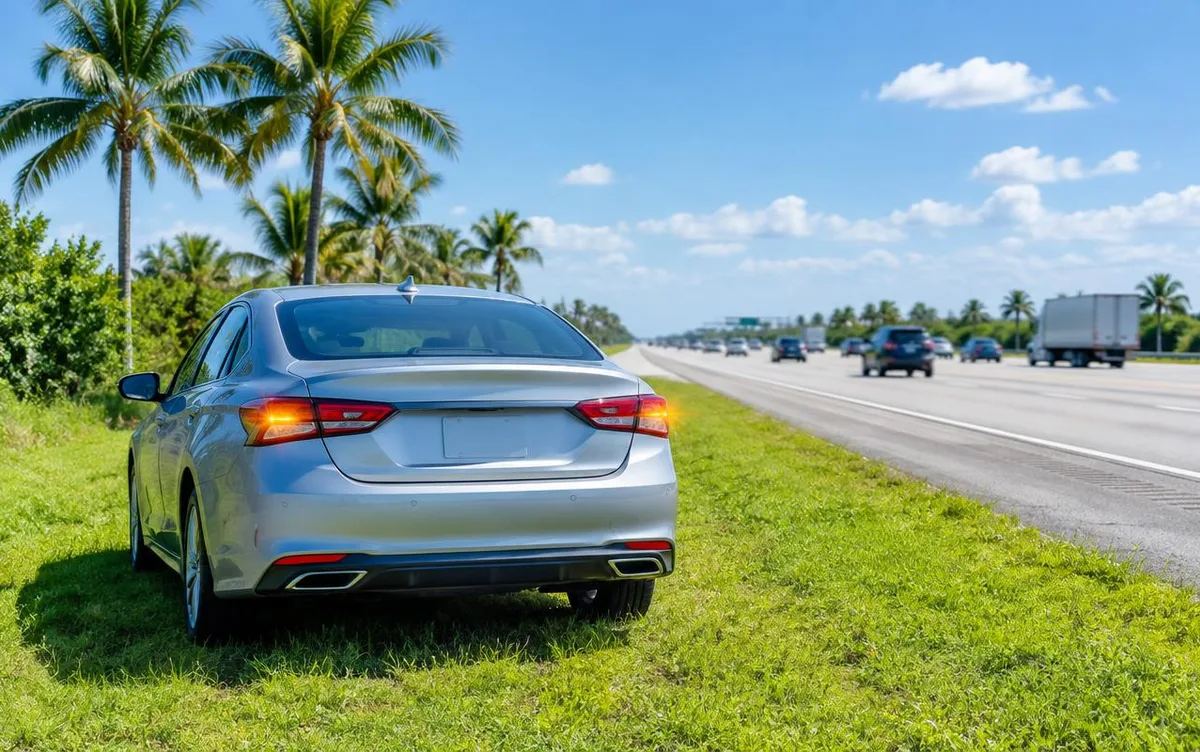
Storms don't just flood roads. They turn grass, sand and dirt shoulders soft. Pulling onto a wet shoulder, a grass lot at an event, or a muddy yard can leave your tires spinning. If you're stuck:
- Stop spinning the wheels. It digs you in deeper and can overheat the tires and transmission.
- Don't let people push the car from behind while the wheels are spinning. Mud and rocks can fly back at them.
- Call for a winch out. A truck pulls the car back onto firm ground with a cable, without dragging it across the dirt.